
Dental Implants vs Dentures: Which Is the Better Long-Term Option?
Missing teeth affects people more than we think. It changes not only your smile but your life. You smile less, avoid photos, and even change how you talk so people don’t notice. It’s uncomfortable, and it gets frustrating fast. If you’re trying to decide between dental implants vs dentures, you’re probably not just thinking about today. You’re thinking about five years from now. Ten years.
You want something that works not just something that fills a gap. Dental implants vs dentures isn’t a simple best and worst situation. It’s more like choosing between two very different tools. Each can be the best in the right situation and frustrating in the wrong one. Let’s make it simple with this guide.
First, what are dental implants?
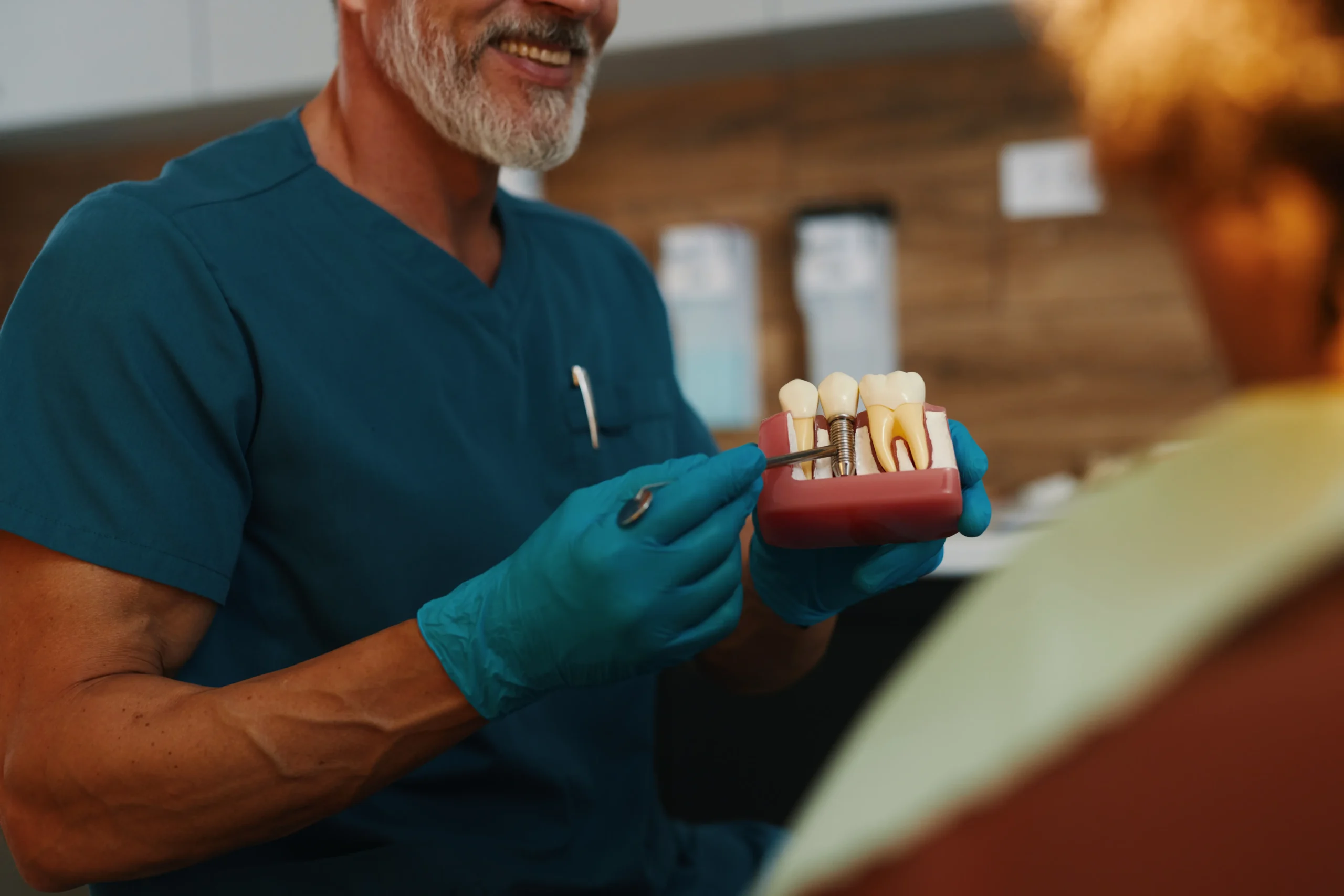
A dental implant is a small titanium (or titanium-alloy) post placed into the jawbone to act like an artificial tooth root. Once it bonds with the bone (osseointegration), it can support:
- A crown (single tooth replacement).
- A bridge (multiple teeth).
- An implant-supported denture (overdenture).
Implants are widely considered a long-lasting replacement option when properly planned and maintained. NHS hospital guidance describes implants as artificial tooth-root replacements used to support crowns, bridges, or dentures.
Typical timeline:
- Assessment and scans.
- Implant placement (surgical appointment).
- Healing/osseointegration (often several weeks to months).
- Final tooth or denture attachment.
It’s not “instant teeth” for most people, but it can change life when done well.
What are dentures?
Dentures are removable false teeth that sit on the gums (and sometimes clip to remaining teeth). They can be:
- Full dentures (replace all teeth on the upper/lower arch).
- Partial dentures (replace some teeth, often with clasps).
- Immediate dentures (placed soon after extractions, then adjusted as healing changes the fit).
The NHS describes dentures as false teeth used to replace missing teeth, with an adjustment period and ongoing care needed to keep them clean and functional. Dentures are a valid, common solution especially when you need a quicker option or implants aren’t suitable right now.
Dental implants vs dentures (the long-term comparison that matters)
1) Comfort and feels like real teeth.
Dental implants
- Tend to feel the most “natural” because they’re anchored in bone.
- No bulky palate coverage (in many implant restorations).
- Less movement while eating or talking.
Dentures
- It can feel bulky at first.
- May rub, move, or click (especially lower dentures, which have less suction).
- Many people adapt well… but some never truly love them.
If your confidence is taking a hit, implants often win on comfort and stability. But if you’re okay with a removable solution and you want minimal invasiveness, dentures can still be a good long-term choice with the right fit and follow-up.
2) Chewing power and food freedom
This is where dental implants vs dentures becomes very practical.
Implants generally allow stronger biting and more confidence with foods like steak, apples, crusty bread, and nuts because the teeth are supported by a fixed foundation.
Dentures can work well, but the experience varies:
- Hard or sticky foods may feel risky.
- Some people avoid certain textures.
- Lower dentures can be the main troublemaker.
A well-made denture plus good aftercare can still restore function nicely but if you want to “eat without thinking”, implants often take the lead.
3) Jawbone changes over time
Here’s something many people don’t hear at the start: when you lose a tooth, the jawbone in that area can gradually shrink because it’s no longer stimulated by chewing forces.
Dental implants help provide that stimulation to the bone (because the implant sits in the jaw), which can support long-term structure.
Dentures sit on top of the gums and don’t stimulate the bone in the same way. So, some people experience more bone and gum changes over the years, which can affect fit.
This is one reason people who start with dentures sometimes move to implant-supported dentures later, if they’re suitable.
4) Maintenance and ongoing appointments
Let’s compare dental implants vs dentures in day-to-day life.
Dental implants
Implants aren’t “fit and forget”. They need proper hygiene and reviews, because the gums and bone around implants can still get inflamed.
Risks of implant surgery, such as infection, nerve issues, or sinus problems (for upper jaw implants). However, complications are usually manageable when treated promptly. Typical upkeep:
- Brush + interdental cleaning (daily).
- Regular hygiene visits.
- Avoid smoking (it’s a major risk factor).
- Address grinding (night guard if needed).
Dentures
Dentures need cleaning and periodic checks, too. The ADA highlights that dentures can accumulate plaque/biofilm and should be cleaned daily with appropriate methods. Typical upkeep:
- Daily cleaning (not just a quick rinse).
- Removing at night (often recommended).
- Relines/adjustments as gums change.
- Replacement over time due to wear or fit changes.
In short, implants are lower hassle during meals but higher discipline with hygiene. Dentures are simpler medically, but may require more fiddling and refitting.
5) Longevity: Which lasts longer?
This is usually the deal-breaker question.
Dental implants
Many reputable sources describe implants as long-lasting when cared for properly. Some NHS trust guidance notes that studies show around 90% of implants placed 10 years ago are still present and functional. That said:
- The implant post may last a long time.
- The crown/bridge on top can still wear and may need replacement in the future.
Dentures
Dentures can last for years, but the fit often changes as gums and bone change. Many people need to change their lines to maintain comfort and function. If you’re a good candidate and maintain dentures better.
6) Cost and treatment time
Many people get confused because both sides have a point:
Dentures have a lower upfront cost and a quicker treatment duration for having teeth again. But it may involve ongoing costs to maintain them (such as adjustments, relines, replacements, or adhesives).
Dental implants have a higher upfront cost, and treatment may take months. But it can reduce long-term fit issues and may last longer, depending on your case.
A useful way to think about dental implants vs dentures is: Dentures often cost less today. Implants may cost less “in hassle” over the next decade. Not always, but often.
7) Who is a good candidate for implants (and who isn’t)?
Implants aren’t suitable for everyone, at least not immediately. You may need extra planning if you have:
- Significant bone loss (you might need grafting).
- Untreated gum disease.
- Heavy smoking (increases complication risk).
- Certain health conditions (your dentist will assess).
- Poor oral hygiene routine (implants demand consistency).
Implants should be placed and restored by appropriately trained clinicians. NHS guidance notes that qualified dentists with suitable training provide implant care. If implants aren’t right right now, that doesn’t mean you have never. Some people start with dentures, stabilise their oral health, then upgrade to implant-retained dentures later.
Many people love (middle option) implant-retained dentures.
If you’ve been stuck in the dental implants vs dentures debate, this option often lands right in the sweet spot. Implant-retained dentures (overdentures) are dentures that clip onto implants, improving stability dramatically especially on the lower jaw. Benefits:
- Less slipping.
- Better chewing confidence.
- Often smaller than traditional full dentures.
- It can be more cost-effective than replacing every tooth with individual implants.
NHS hospital information notes that implants can support dentures, crowns, or bridges, which include these hybrid solutions.
Quick decision guide (how to pick the right one?)
You may go for dental implants if you:
- Want a stable and natural tooth.
- Hate the idea of removable teeth.
- Want chewing confidence.
- Can invest upfront
- Want hygiene.
You may go for dentures if:
- You want a quicker and lower-cost option.
- You want to avoid surgery (or you’re not suitable for it).
- You can easily wear removable teeth.
- You are okay with adjustments and possible replacements.
You may prefer implant-retained dentures if:
- Want more stability than standard dentures.
- Have many teeth missing.
- Want a strong long-term upgrade without full mouth implants.
Final Thoughts (Which One Wins Long-Term?)
When it comes to dental implants vs dentures, there isn’t a universal “best” option only the best option for you. Choosing between dental implants vs dentures isn’t just about teeth. It’s about lifestyle.
- It’s about whether you want to remove your teeth at night.
- It’s about whether you want surgery.
- It’s about whether you’re planning five years ahead or twenty.
If you’re looking for the most natural feel, long-term bone support, and stability that closely mimics real teeth, dental implants usually come out ahead. They are high in costs (in terms of time) but they often deliver stronger confidence and comfort over the years.
On the other hand, dentures remain a reliable, accessible solution. They’re less invasive, more affordable initially, and can restore your smile effectively especially when crafted and maintained properly. For many patients, the real sweet spot lies somewhere in between, such as implant-retained dentures. It’s not always about choosing sides. It’s about choosing sustainability.
The right decision comes from a proper clinical consultation not just reading articles online. Because at the end of the day, the best long-term option is the one that fits your health, your habits, and your future.