
Invisalign & Braces in London: Which Option is Best for You?
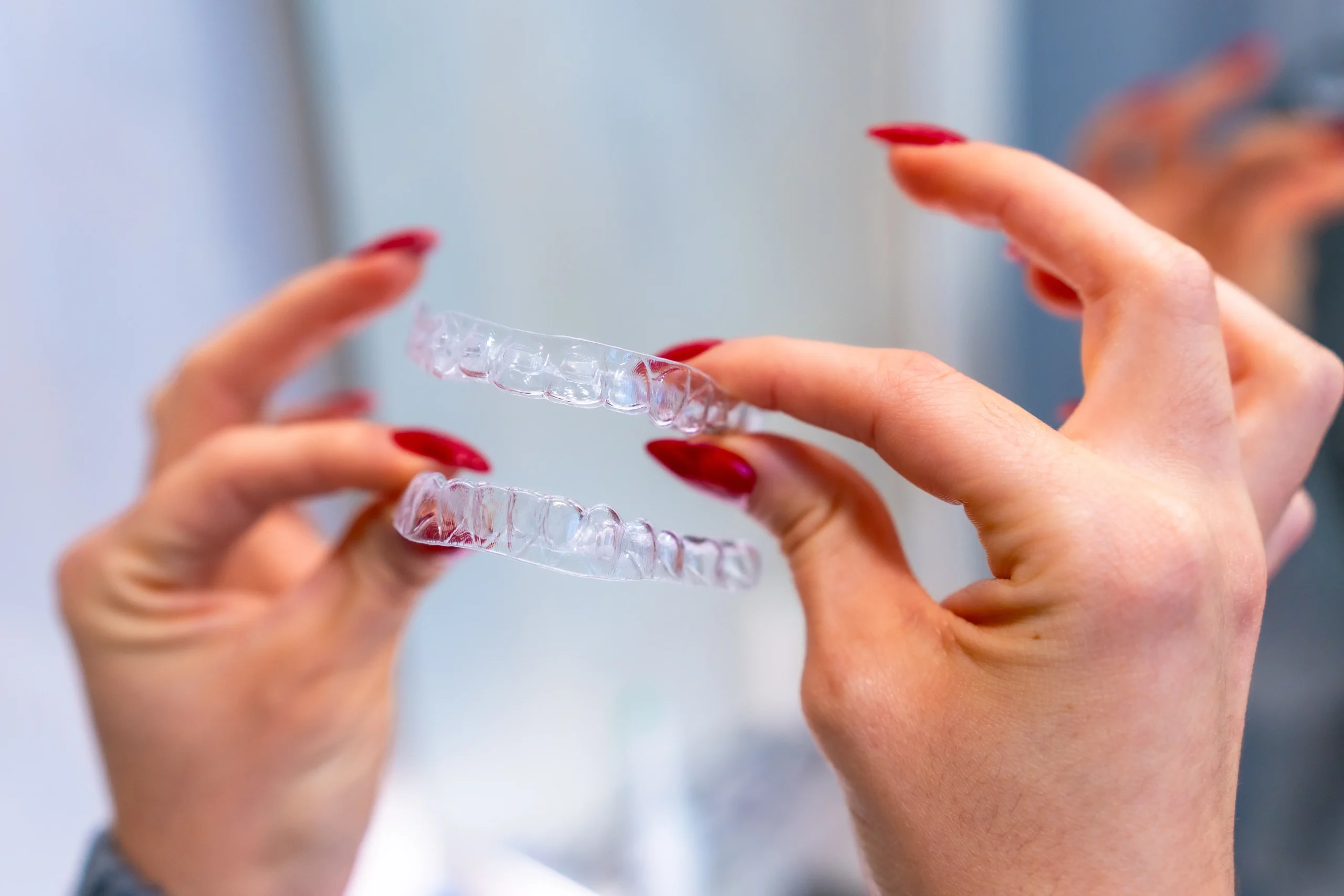
Braces and Invisalign are the two most popular treatments to get a perfect smile. Both methods are effective; however, their treatment methods, appearance and comfort vary significantly.
Choosing between Invisalign and braces in London can feel like standing at a busy junction with three green lights. Both routes can get you to a straight smile. The trick is picking the one that suits your teeth, your lifestyle, and your budget. Below, we’ll unpack the differences without jargon, share who each option is best for, and give you a clear plan to decide.
What do we mean by “Invisalign” and “braces”?
- Invisalign (clear aligners):
A series of near-invisible, removable trays that nudge teeth in small steps. You wear each set for about 1–2 weeks, 20–22 hours a day, then switch to the next. - Braces:
Brackets and wires fixed to the teeth. These can be metal braces, ceramic (tooth-coloured) braces, or lingual braces (fitted behind the teeth).
Both are proven. Both work in London as well as anywhere else. The differences lie in visibility, daily routine, control over complex moves, and cost structures.
Invisalign and Braces in London: A Quick Snapshot
- Discretion: Invisalign wins for most people; ceramic and lingual braces are close contenders.
- Complex bites: Fixed braces (including lingual) often give an orthodontist the strongest “handle” on tricky tooth movements.
- Discipline: Invisalign relies on you wearing aligners 20–22 hours daily; braces stay on and do their thing.
- Comfort: Aligners are smooth; braces can rub initially, though wax helps.
- Food freedom: Aligners are removed to eat; with braces, you’ll avoid very sticky/hard foods.
- Appointments: Aligners often pair with remote monitoring; braces typically need in-person wire adjustments every 6–8 weeks.
- Cost in London: Varies widely. Invisalign and ceramic/lingual braces can be similar at the higher end; metal braces are usually more affordable privately.
Who is Invisalign best for?
Adults and teens who want discretion and flexibility. Clear aligners are the best for people who have to face clients or the camera. You remove them to eat, so no food list to memorise. If your crowd loves flat whites and turmeric lattes, aligners won’t stain like elastics sometimes can. Aligners are also great for:
- Mild to moderate crowding or spacing.
- People who brush after lunch (easier with removable trays).
- Those who like tracking progress with apps/remote check-ins.
- Combination plans: aligners first, then light composite bonding to refine edges.
Aligners only work when they’re in. If you tend to forget things or snack all day, the stop-start may slow progress.
Who are braces best for?
Anyone with complex movements: rotations, significant bite correction, or vertical tooth changes. Fixed appliances give orthodontists a reliable grip to steer teeth precisely. Braces often lead:
- Severe crowding or deep overbites.
- Significant crossbites or open bites.
- Cases needing exact root positioning for future veneers/implants.
- People who know they’ll struggle with aligner wear time.
Among brace types:
- Metal braces: Classic, durable, typically the best value.
- Ceramic braces: Less visible, slightly bulkier, can cost more.
- Lingual braces: Hidden behind teeth, very discreet, technically demanding, often higher fees and longer chair time.
How long does treatment take?
The duration may vary person to person, depending on their needs:
- Mild cases: 4–8 months (either method).
- Moderate cases: 9–14 months.
- Complex cases: 15–24+ months (braces often preferred).
Speed isn’t everything. What you’re really buying is predictable results that look natural and last.
Comfort, speech, and daily life
- Comfort: After each aligner change or brace adjustment, you may feel discomfort for a few days. Over-the-counter pain relief usually suffices.
- Speech: Aligners may add a slight lisp for a day or two; lingual braces can take longer to adapt.
- Eating: With Invisalign, you take trays out; with braces, you’ll avoid very hard or sticky foods.
- Oral hygiene: Aligners make brushing/flossing normal. With braces, invest in interdental brushes and maybe a water flosser.
Cost of Invisalign and braces in London
London pricing varies by case complexity, clinic location, and the expertise involved.
- Metal braces: usually the most cost-effective private option.
- Ceramic braces: a step up in fees for aesthetics.
- Lingual braces: premium due to lab work and technique.
- Invisalign: similar to ceramic or lingual, depending on case complexity and number of ligners.
Ask for:
- An itemised plan (records, aligners/brackets, refinements, emergency visits).
- Retainers included (and which type).
- Review visits and remote monitoring (if offered).
- Any extras like whitening, polishing, or contouring at the end.
The total cost of ownership includes retainers and maintenance. A cheap start that ignores retainers is a false economy
Lifestyle fit: the real decider
- Busy professionals: Invisalign (discreet, fewer clinic visits with remote reviews) or lingual braces if you prefer fixed.
- Performers/public speakers: Aligners or ceramic braces; test speech early.
- Foodies: Aligners let you eat what you like—just brush before trays go back in.
- Teens playing sports: Aligners are removable for contact sports (use a proper mouthguard); braces need a sports guard too.
- Forgetful wearers: Braces remove the compliance variable; they’re always working.
How does the process work?
Your dentist may take photos, X-rays, and a digital scan on your first consultation. They talk about your goals, treatment duration, and its costs. For Invisalign, your digital treatment plan maps tooth movements. Your orthodontist plans wire sequences and mechanics for braces. Then, aligners are attached or braces are bonded on, with instructions on how to wear them. The dentist will check your aligners in person or remotely. But you need to visit the clinic to adjust the braces. If necessary, you can ask for whitening and minor refinement. Your dentists may ask you to wear fixed and/or removable retainers to hold the result.
Red flags
- No mention of GDC registration or qualifications.
- Vague pricing; no written plan.
- No talk of retainers or aftercare.
- Pressure to decide on the spot or “today-only” discounts.
- Lack of real case photos, or photos that look filtered and inconsistent.
A trustworthy clinic will welcome questions and show you comparable cases.
FAQs
- Can I whiten during treatment?
With braces, whitening waits until the end. With aligners, your dentist may time whitening alongside trays—ask for a plan. - Will I need teeth filed (IPR)?
Sometimes, a tiny space is needed for alignment. When done properly, it’s conservative and safe. - Do Invisalign trays smell or stain after some time?
If you keep them clean and avoid hot drinks while wearing them, you’ll be fine. Trays are changed on the schedule your dentist provides. - What happens if I lose an aligner?
Contact the clinic. You may step back to the previous set or move ahead depending on timing. - Can braces break during use?
Yes, a bracket or a wire may wear out after some time. London clinics usually offer quick fixes; some have emergency slots.
Choosing the Right Orthodontist in London
A good clinician matters more than the system. Look for:
- GDC-registered orthodontists (see this on the General Dental Council website).
- Real patient’s before-and-after treatment photos.
- Written treatment plans.
- Clear pricing.
- Modern tools (use digital scans instead of messy impressions).
- Easy to access — near your workplace for easy visits.
- Patient reviews that discuss care, not just results.
Your orthodontist should explain every option, discuss pros and cons, and never pressure you into same-day decisions.
How to Decide Between Invisalign and Braces?
- Assess your goals and ask yourself, do you want little changes or a full transformation?
- Consider your habits, if you can wear aligners 20+ hours a day?
- Can you wear a visible brace? Does it affect your job or daily life?
- Ask your orthodontist if aligners or braces are the best for your case.
- Calculate the total costs that include retainers and aftercare.
- Trust your gut and choose the option you can stick with consistently.
When treatment matches your personality, your treatment flows smoothly — and the results last.
Aftercare and retainers (the bit people forget)
- Fixed retainers: A slim wire bonded behind front teeth—hands-off, always on.
- Removable retainers: Worn nightly or as advised.
- Hygiene & checks: Stick to your oral routine and clean around fixed retainers with care.
- Add-ons: If you had whitening post-treatment, your custom trays make it easy (ask what’s included).
Living With Confidence
The end goal is the same, whether you choose Invisalign or braces. A confident, healthy smile that feels like you. Using Invisalign or braces for straight teeth is not only an aesthetic or cosmetic process. It also improves bite function, makes cleaning easier, and can even reduce long-term dental wear. So take your time, research your clinic, and start the process when you’re ready. In a year or so, you’ll be smiling back at yourself in the mirror, wondering why you didn’t do it sooner.
Mint Dental Centre is your reliable partner, whether you choose Invisalign or braces. We have highly skilled London dentists to help you get the perfect straight smile.